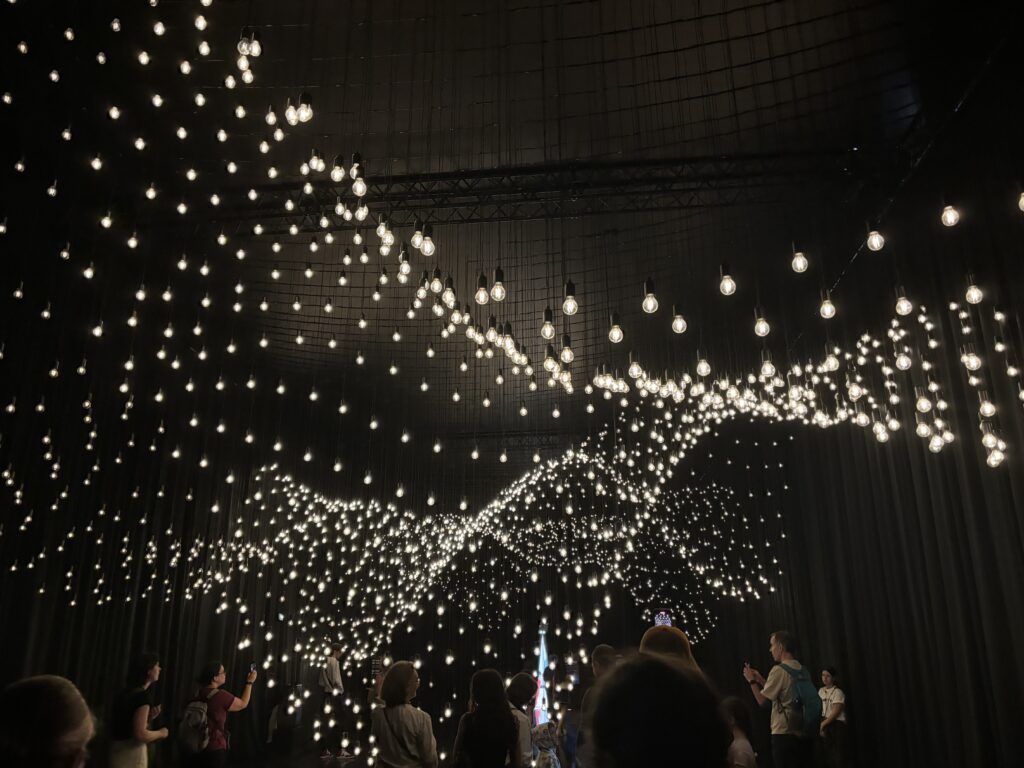
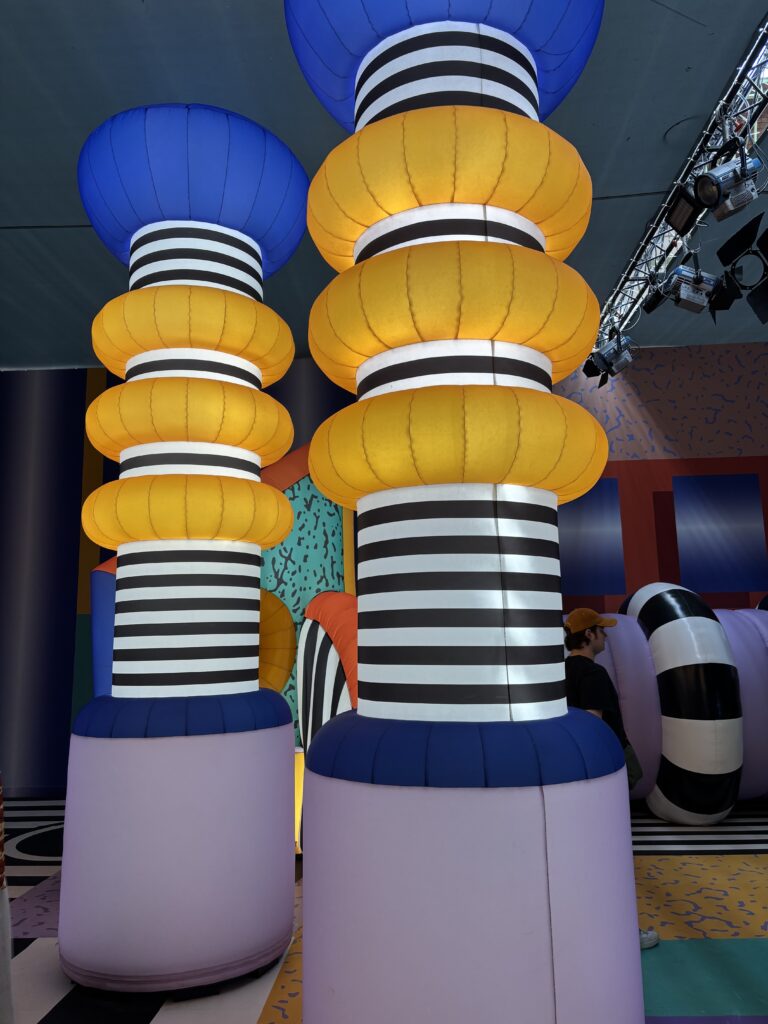
Euphoria’s interactivity is a nice change when compared to many museums and their extremely static exhibits. I feel it successfully brings out the inner child in people, which I believe is necessary in this increasingly negative world. The different installations are pleasant enough on their own, but come alive with human interaction, such as the smoke bubbles, the ball pit, the maze at the entrance, and the pulsing lights that mirror the human pulse when interacted with.
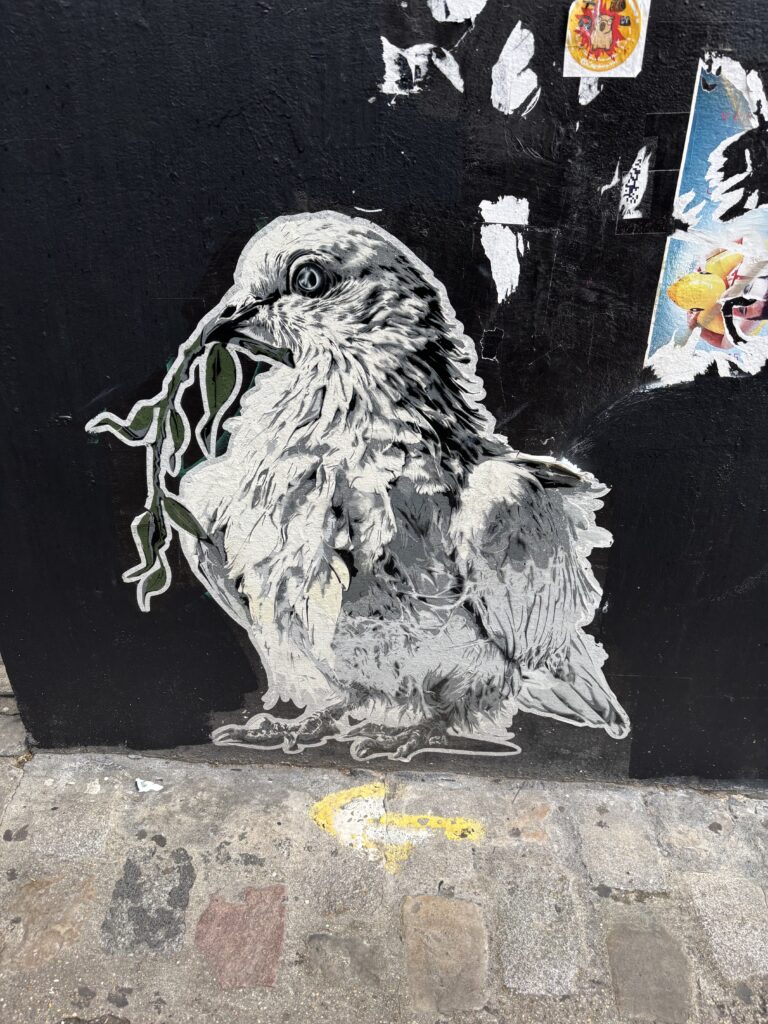
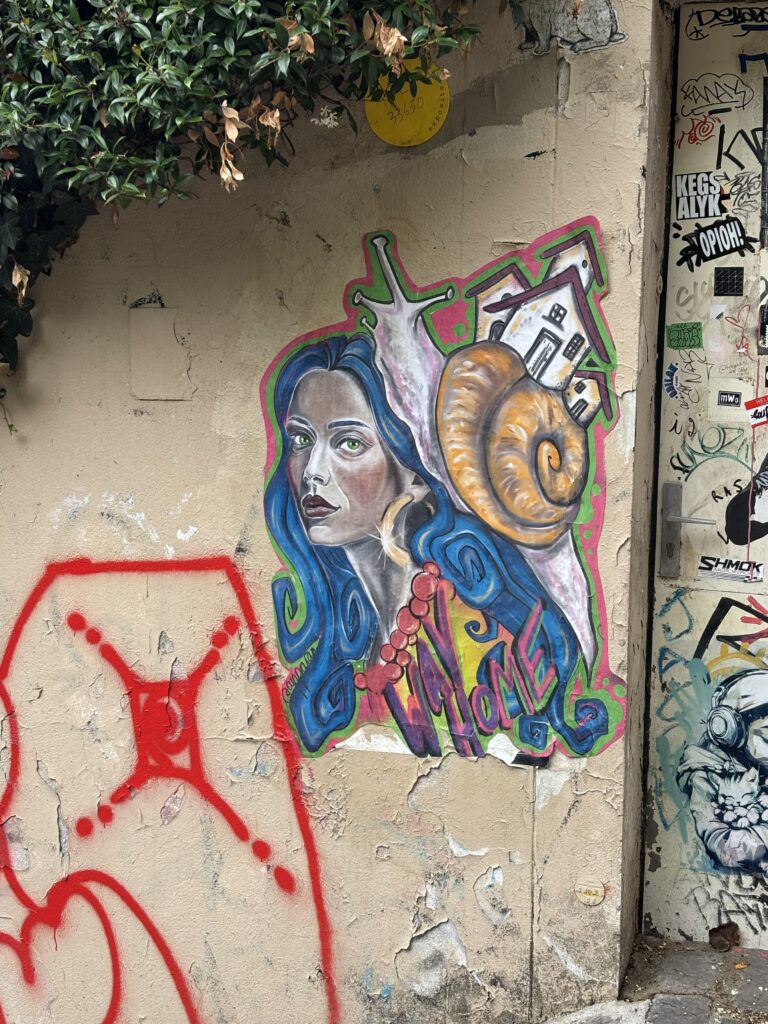
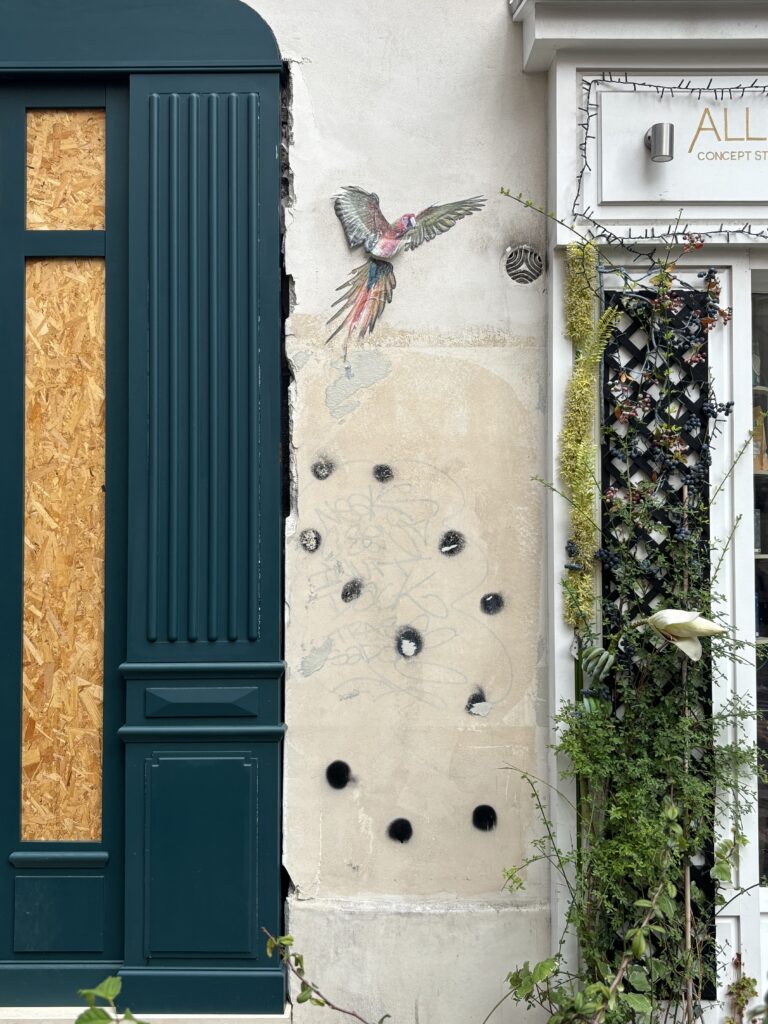
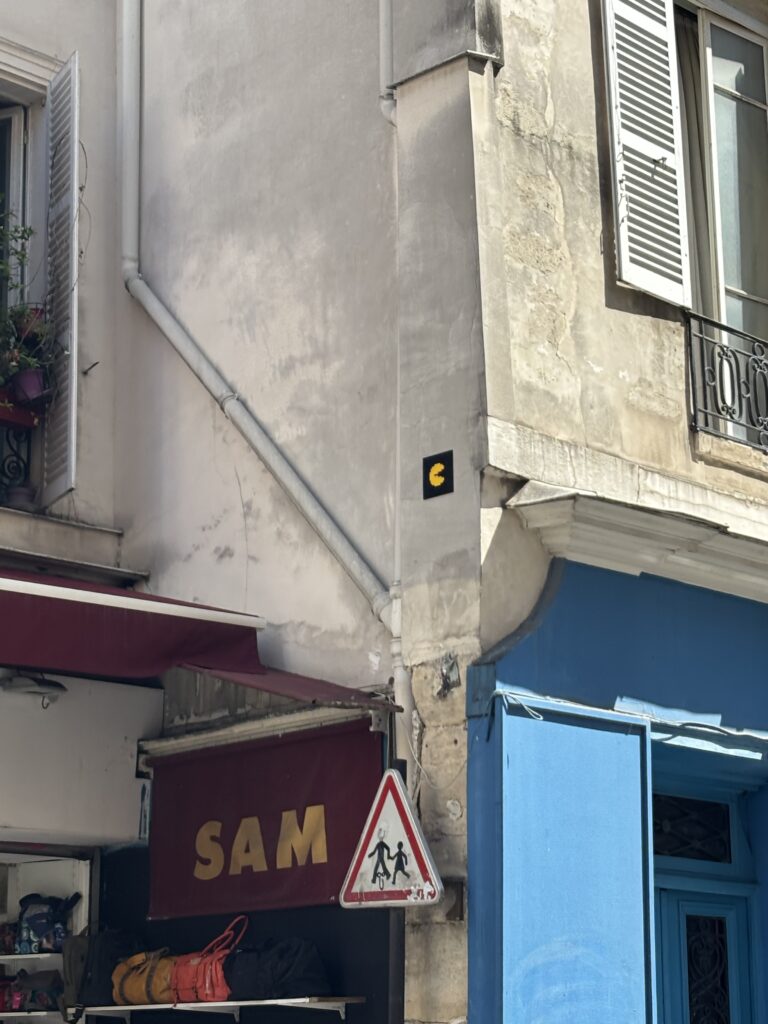
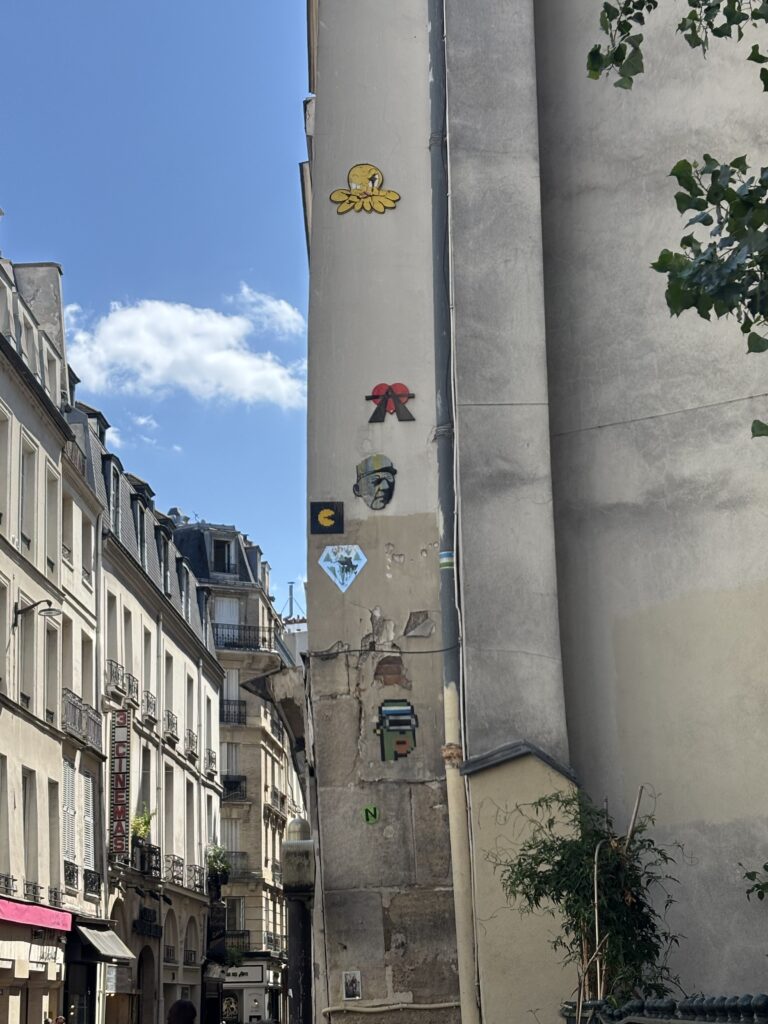
Can’t really think of much to talk about for this one, so have some recent photographs of various street art around Montmartre. Even though the dominant art community moved to Montparnasse, its still a vibrant place.
I also enjoyed seeing the art in the Musée de Montmartre. Out of all the artists present, I think I liked Maximilien Luce’s work the most. Despite being very familiar with Paris’ industry, his shock at seeing Belgium’s industry was somewhat funny. Despite being extremely daunted by the “hostility” of Charleroi’s industrial landscape, he went back four times and painted a total of 33 paintings featuring various aspects of it. Considering most artists are only famous many years after they die, I found it interesting that his art was being displayed at the Durand-Ruel gallery in 1899 while he was alive.
Something else I enjoyed seeing was the semi-preserved artist studio at the top of the museum. It was interesting to see that artist studios were just as cluttered and messy as modern-day studio spaces.
The chocolates from Maison Georges Larnicol were really good, and I thought the carved chocolate sculptures were fun to see.
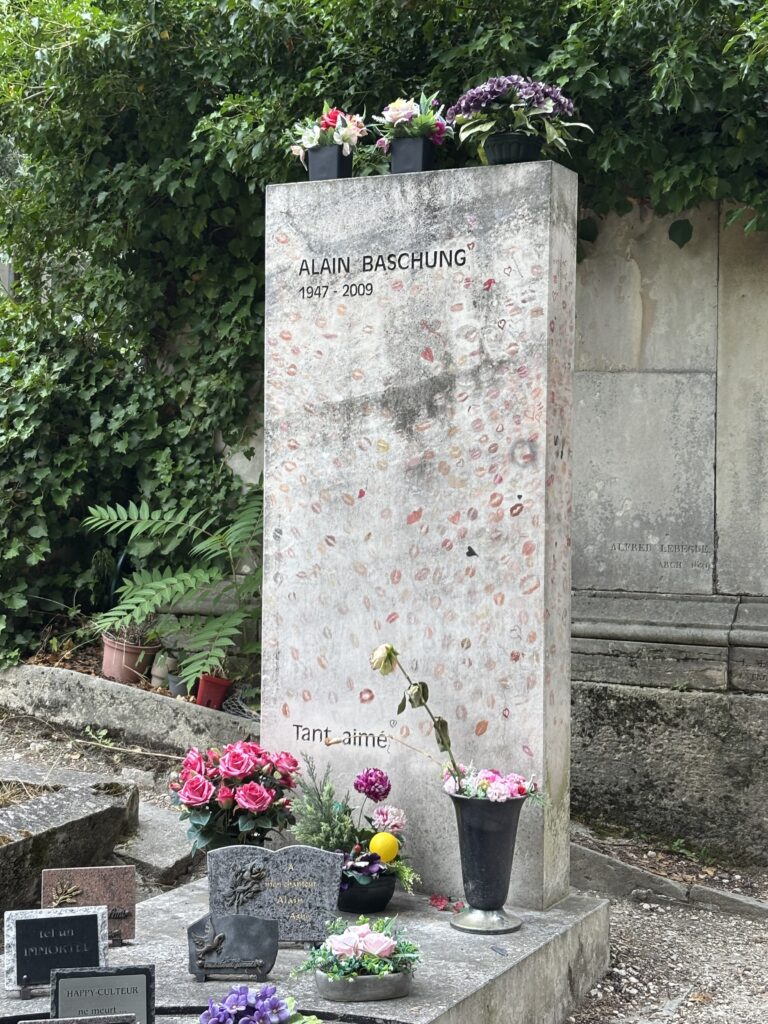
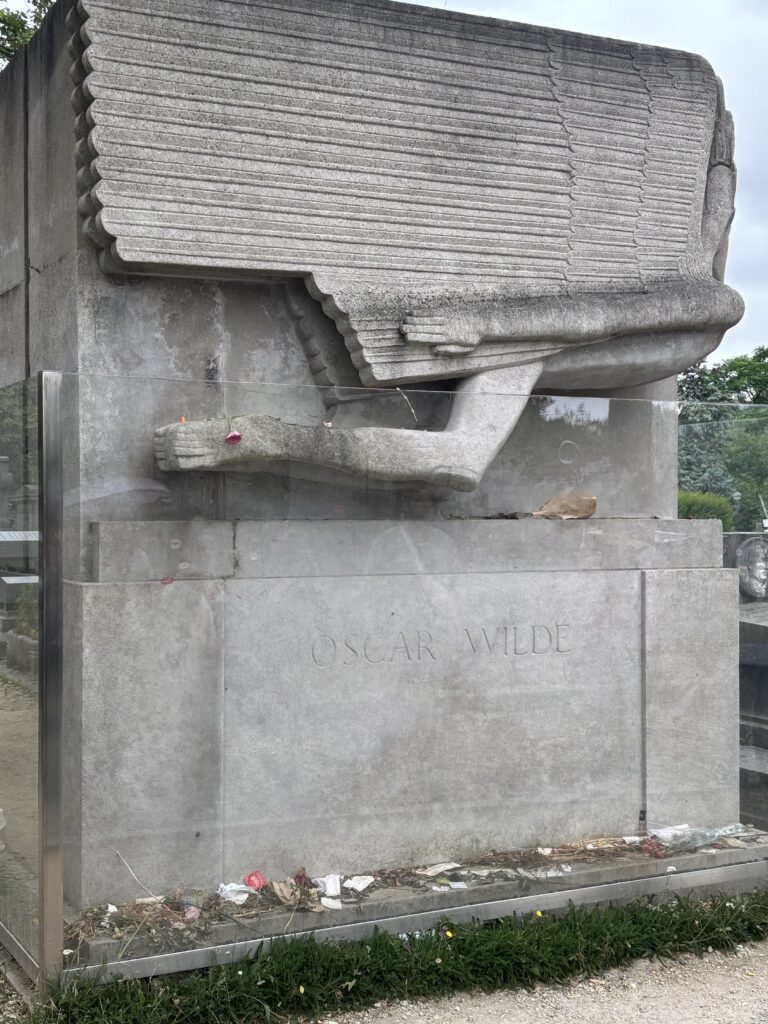
After going to both the Pere Lachaise and Montparnasse cemeteries in Paris, I feel like Parisian cemeteries are laid out in a way that’s visually interesting, while US cemeteries are very uniform and dull.
Decoration
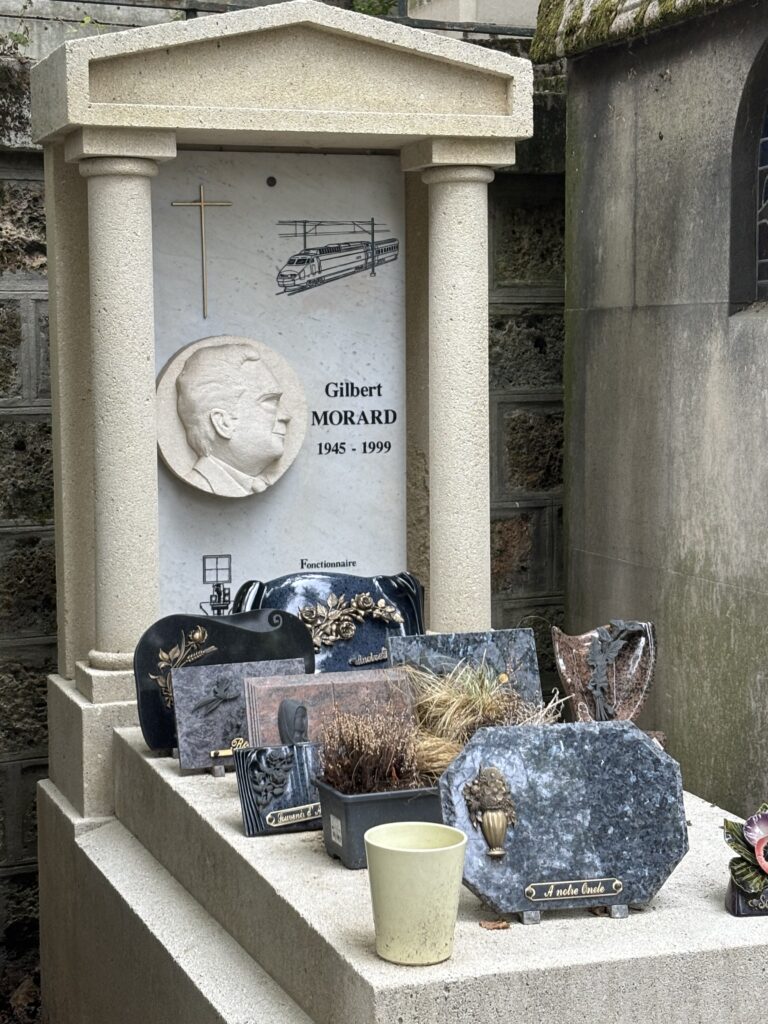
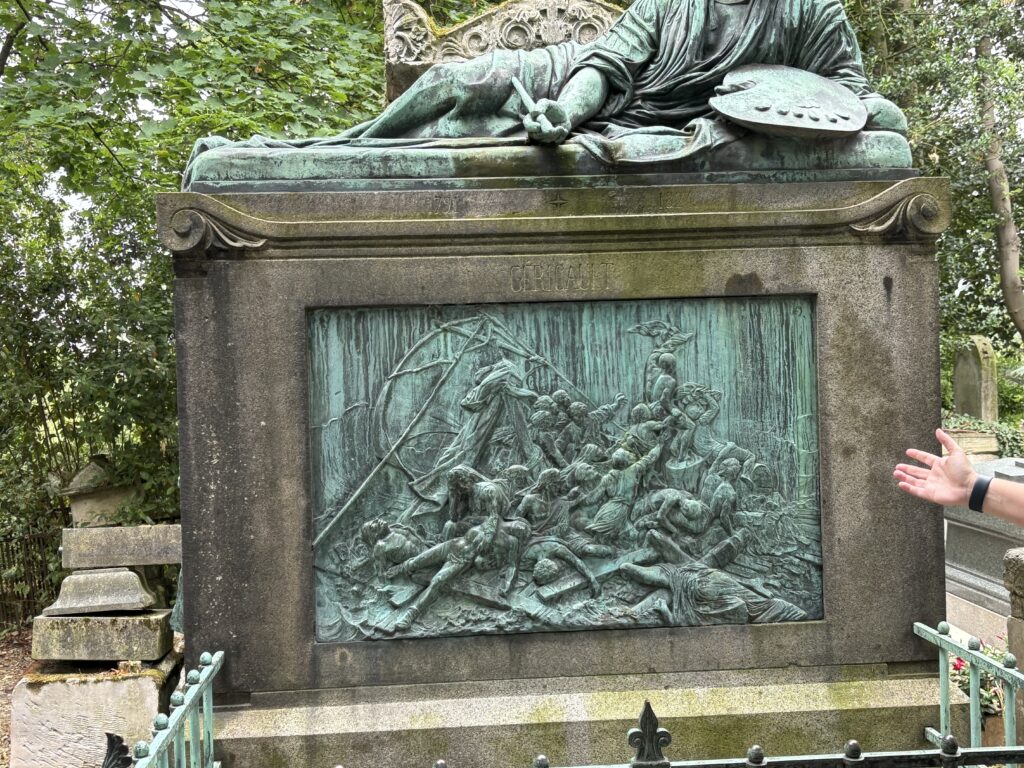
In Paris, the graves aren’t all just a stone in the ground, but miniature monuments or decorated with various materials, and allegorical figures or symbols representing the deceased’s faith. They are also more likely to house several cultural icons like Victor Noir, which turns them into minor tourist attractions.
In the US, graves are very sparsely decorated, usually with flags and flowers. Flat stones are preferred for ease of maintenance. Common motifs are angels, prayer hands, lambs and crosses.
Layout
In the US, cemeteries are a simple, grid-like layout with enough space between rows for hearses and vehicles. Crematoriums and mausoleums are separate from the rest of the grounds. In Paris, crematoriums and mausoleums are integrated into the grounds. They are also very dense and labyrinth-style, with graves tightly packed together with irregular, winding paths between clumps. Other than the main entrance and occasional spot to park a car deeper in the grounds, Parisian cemeteries are very pedestrian-oriented.
When we went to the Musee D’Orsay, I thought it was another, grander Hausmannian-designed structure due to its similarities with the surrounding buildings, but was corrected when I heard it was an example of adaptive reuse in the 1960s from an obsolete train station set to be demolished.
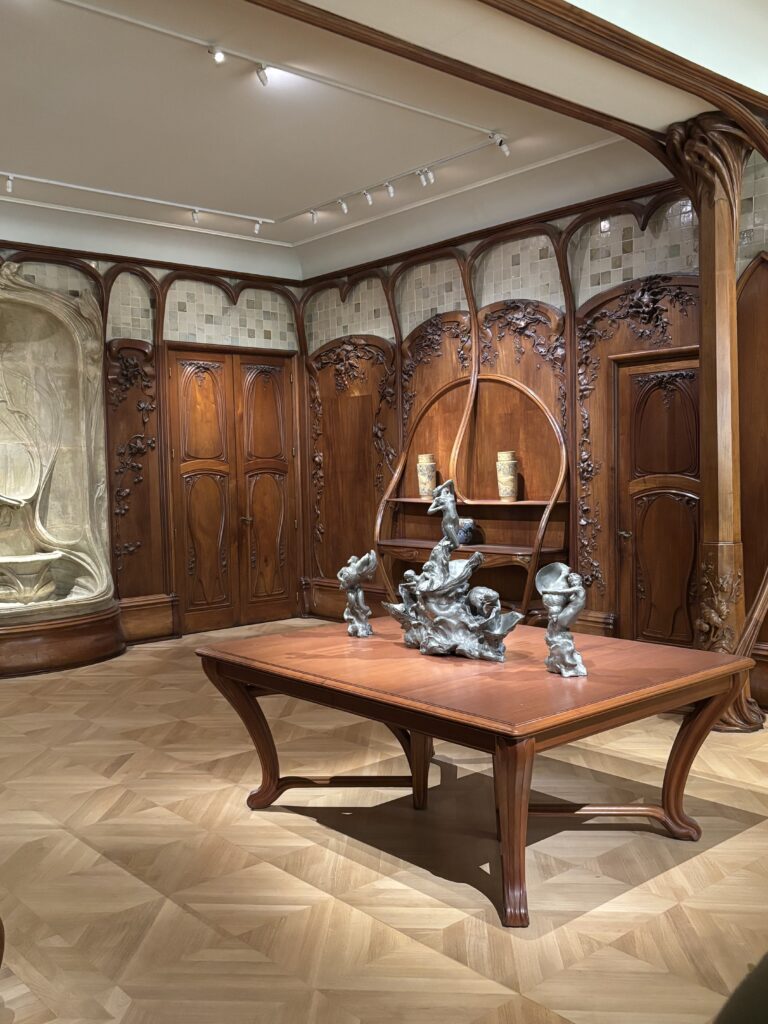
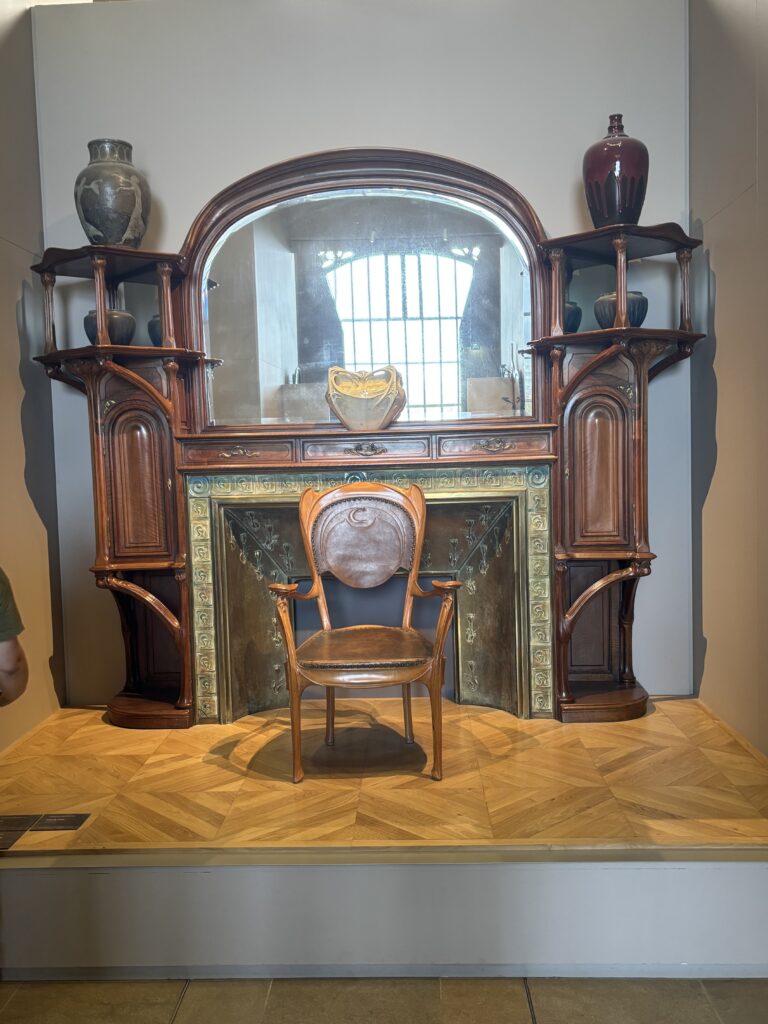
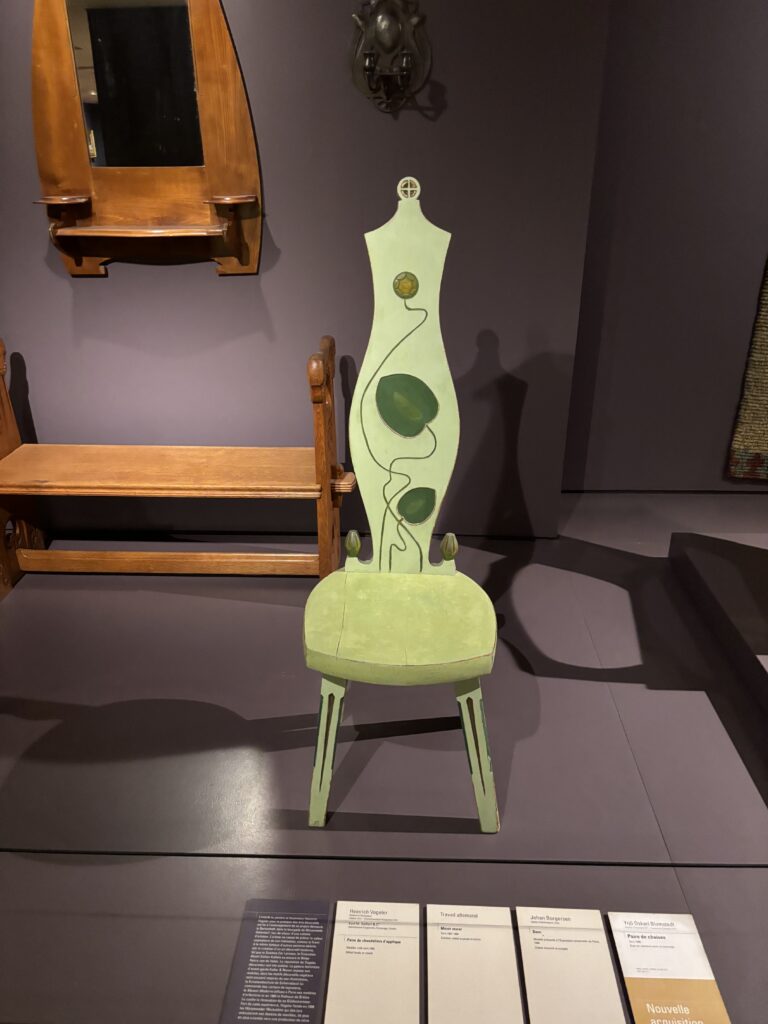
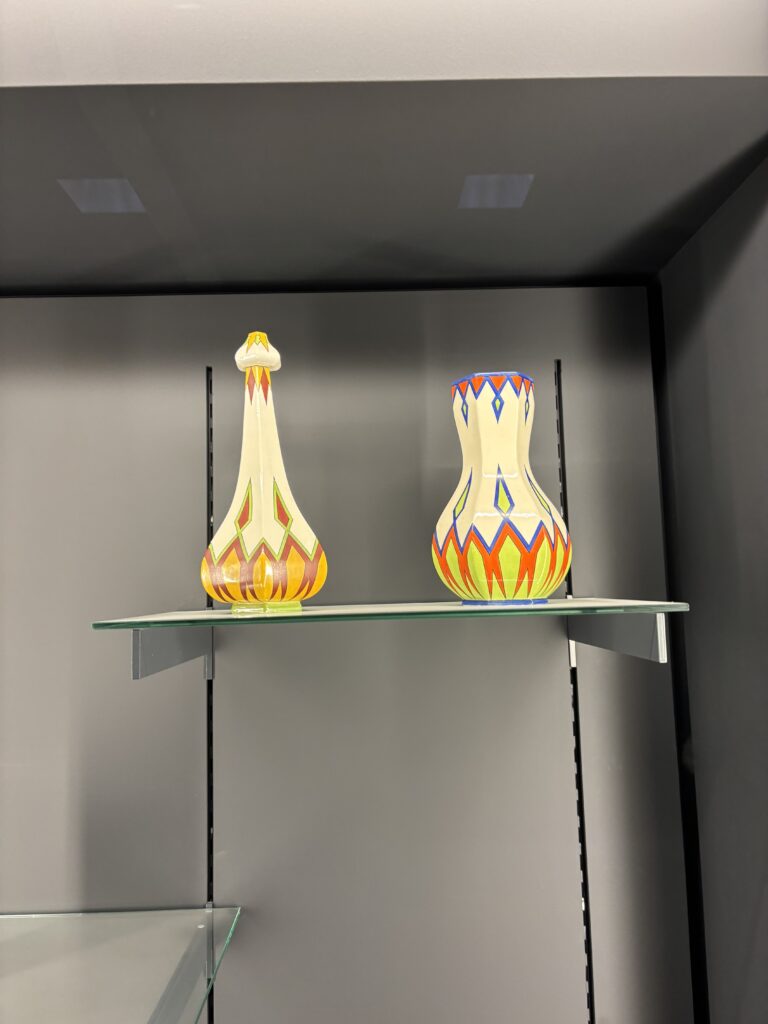
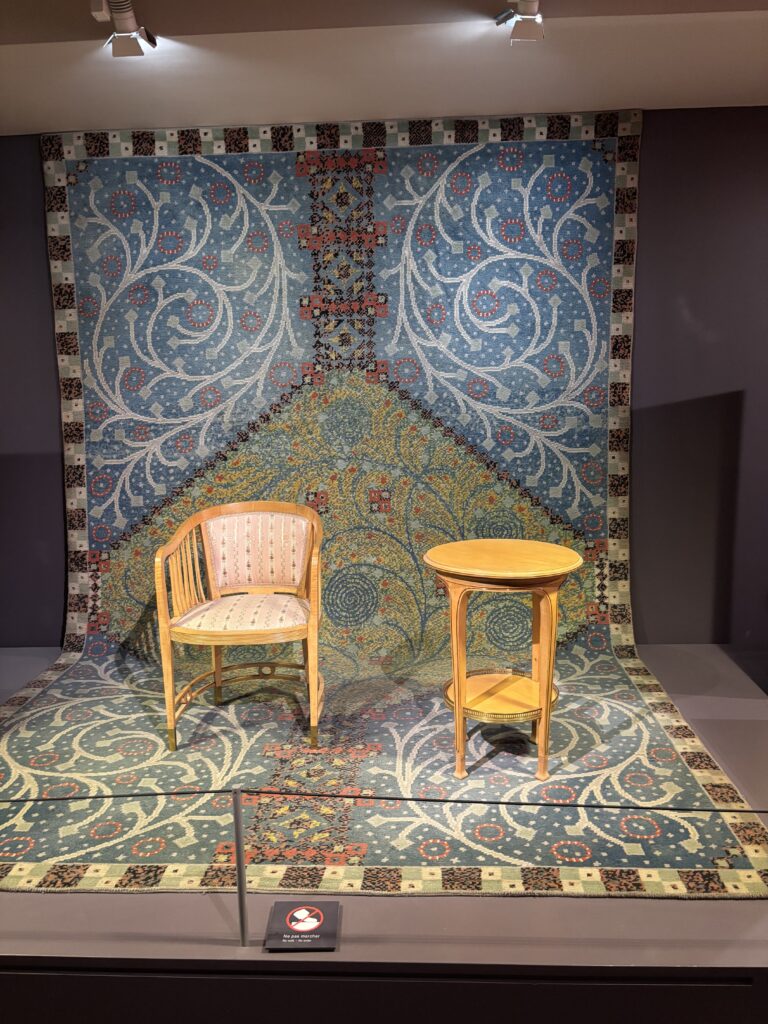
Out of the exhibits being shown in the museum, I liked the Decorative Arts the most. The things I liked the most about it was the craftsmanship and the aesthetic vision behind them. In a rapidly industrializing world, I would assume the elaborate, artisanal handmade pieces were a reaction to the changing world.
Even though public transit in Baltimore and Paris exists to aid movement of people, they contrast heavily in several areas. Both cities have underground transit, but that’s roughly where similarities end. Baltimore’s light rail and subway offer simple services for a limited population center, while Paris is a sprawling backbone for a dense area.
I am discussing factors like size, accessibility, speed, announcements, and station design.
Network Size
Baltimore’s subway system is comprised of a single 15.4 mile long line with 14 stations, terminating at Owings Mills and Johns Hopkins Hospital. The light rail network spans a distance of 30 miles with 33 stations, with Hunt Valley, BWI and Glen Burnie as terminals, with a (recently reopened) branch from Camden Station to Baltimore Penn Station.
Paris’ metro is comprised of 152.6 miles of track with 321 stations, and is regarded as one of the biggest metro systems in the world.
Accessibility and Announcements
Due to the age of Baltimore’s systems and being constructed after the ADA was passed, the subway being built in 1983 and the light rail in 1992, are mostly accessible. All subway stations are ADA accessible with elevators, escalators, ramps, stairs and level boarding. In addition to these, route maps of the line are placed on the station walls. In addition to automated announcements, trains announce their arrivals with two beeps.
The light rail trains, however, are only accessible through an elevated block. Train and delay announcements are in English, and multilingual accessibility is lacking. In terms of on-train way-finding, many vehicles received LCD screens and automated station announcements.
On the other hand, Paris’ metro system is not great for users who rely on wheelchairs or other mobility aids. Only the newer Metro and RER lines are accessible. Despite the large flaws, work to improve mobility-related accessibility on the older lines is ongoing. Due to the size, maps of the system are placed frequently throughout the stations and on the trains. The verbal announcements for train arrivals and alerts are given in French, English and either German or Spanish.
Speed
Both of Baltimore’s systems are slow-speed within city limits, especially with the light rail on Howard Street, but can move up to 60 miles per hour when outside the city. I recall several instances of light rail trains passing traffic on the Jones Falls Expressway (JFX), and being passed by two subway trains on a trip via 395 to a relatives house for some event. Ideally, trains arrive within 10-20 minutes of each other, though trains on both systems can bunch together which throws the timings out of whack.
Paris’ Metro is significantly slower, but more frequent on many lines with trains every 2-4 minutes during rush hour.
Station Design and Decoration
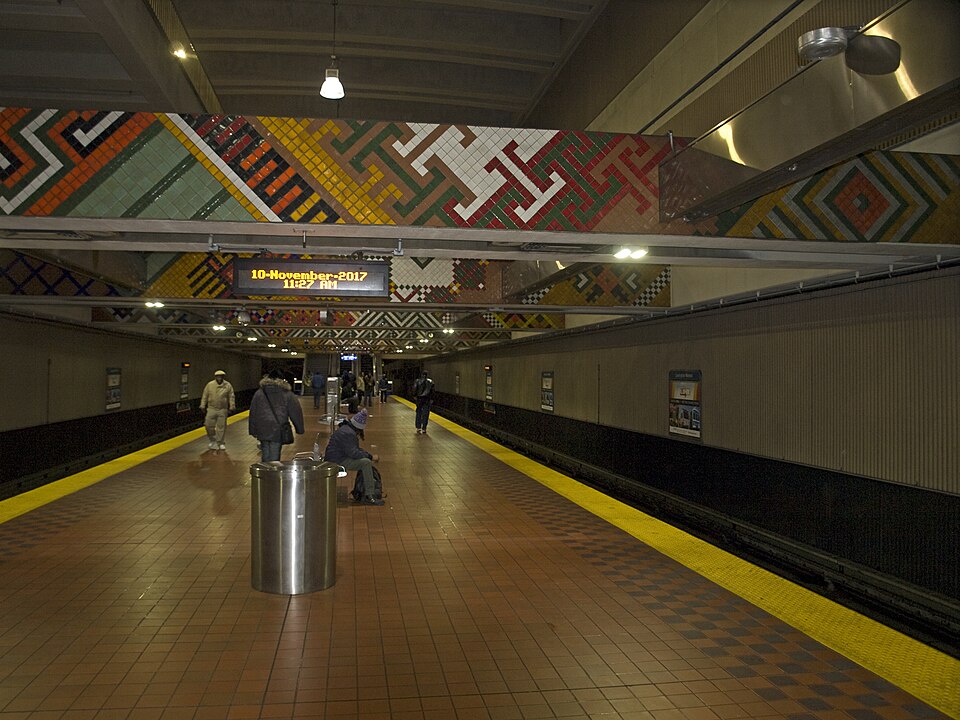
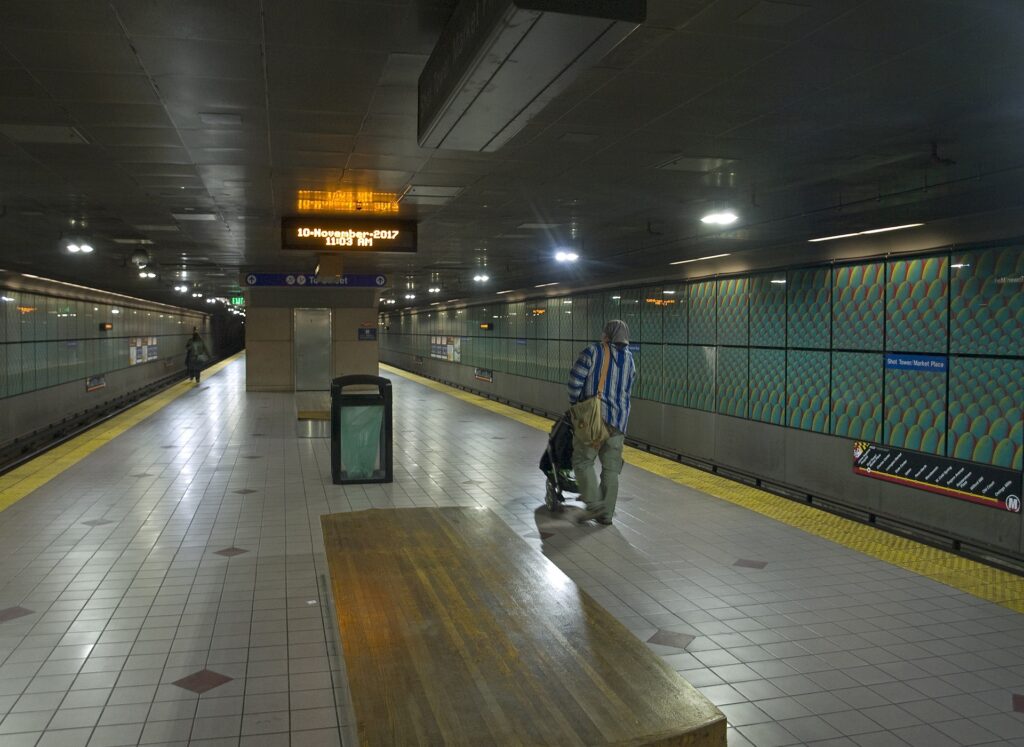
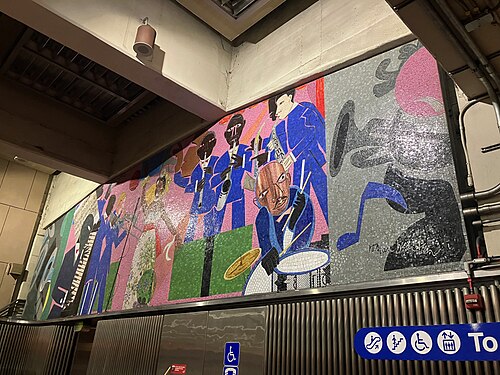
Baltimore’s inner-city stations are sparsely decorated, with tile mosaics, sculptures. Despite these scattered pieces, every station is simple and utilitarian, feeling like concrete bunkers. Baltimore’s light rail stations are extremely plain and simple, with some stations having blue covered waiting areas. Jazz music can be heard playing within the sub
“Relay” by E. Marc Treib – at Penn-NorthLexington MarketShot Tower Marketplace“Baltimore Uproar” by Romare Bearden – Upton-Avenue Marketplace
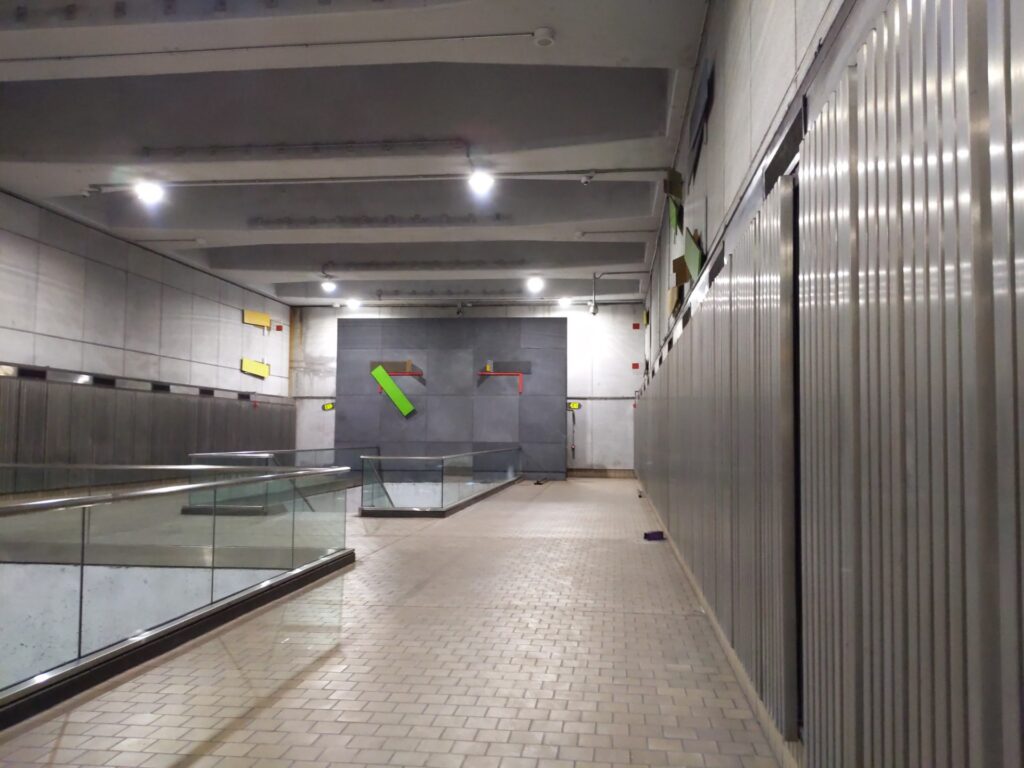
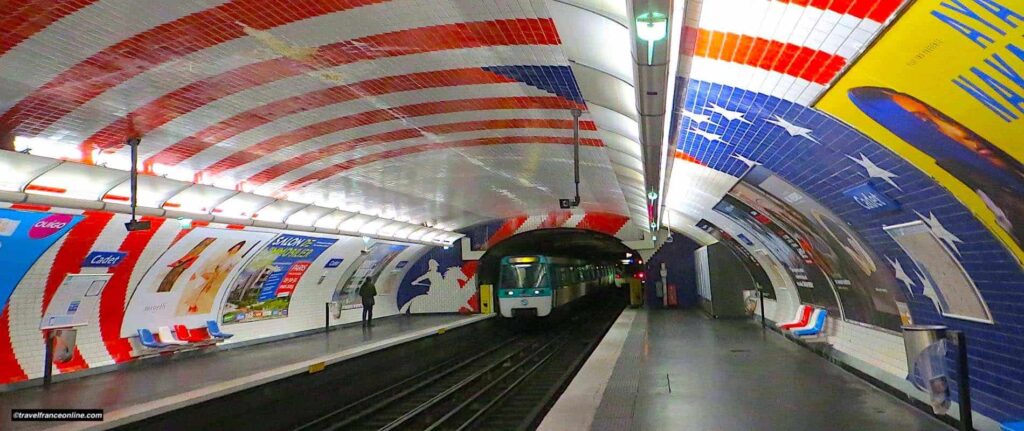
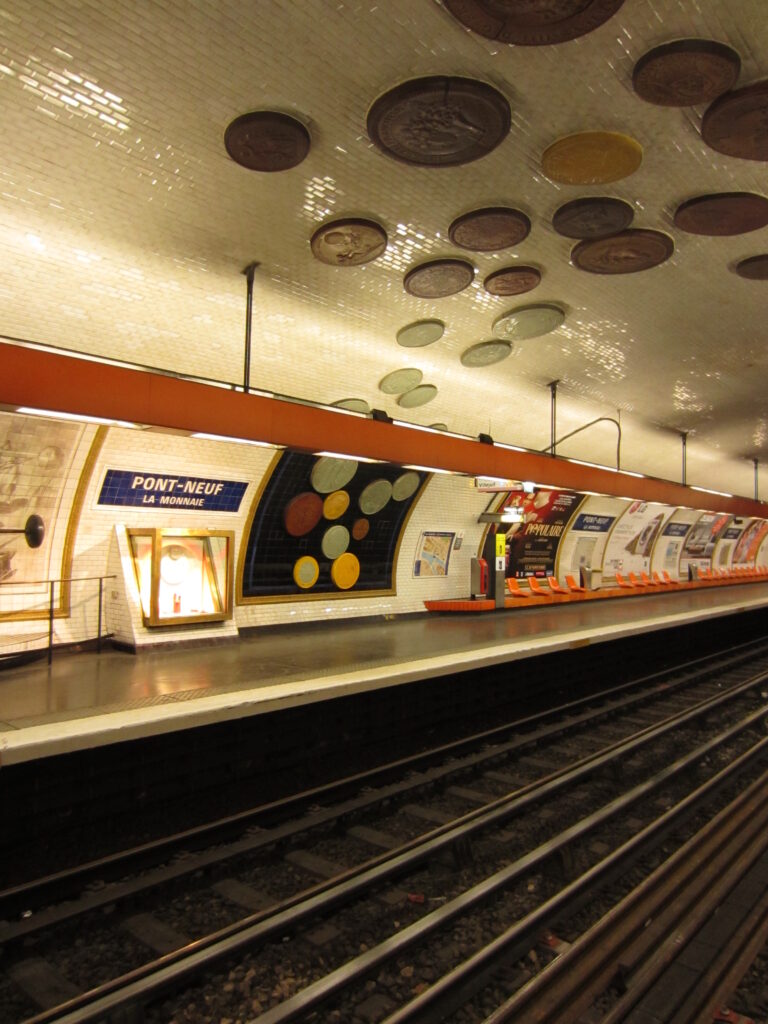
Paris’ metro, on the other hand, doubles almost as an art gallery with Art Nouveau station entrances and themed stations such as Cadet, Pont Neuf, and Arts et Métiers.
Final Thoughts
Public transit in Baltimore isn’t a daily part of life. Much like the city, it’s regularly stigmatized as unreliable and unsafe, with very few people using either line. Both systems feel like parts of a network that would have been great, but were doomed to fail from the start. Despite their downsides, they have a few strengths like accessibility, affordable fares and potential for growth when paired with the political power and will to improve them into something better.
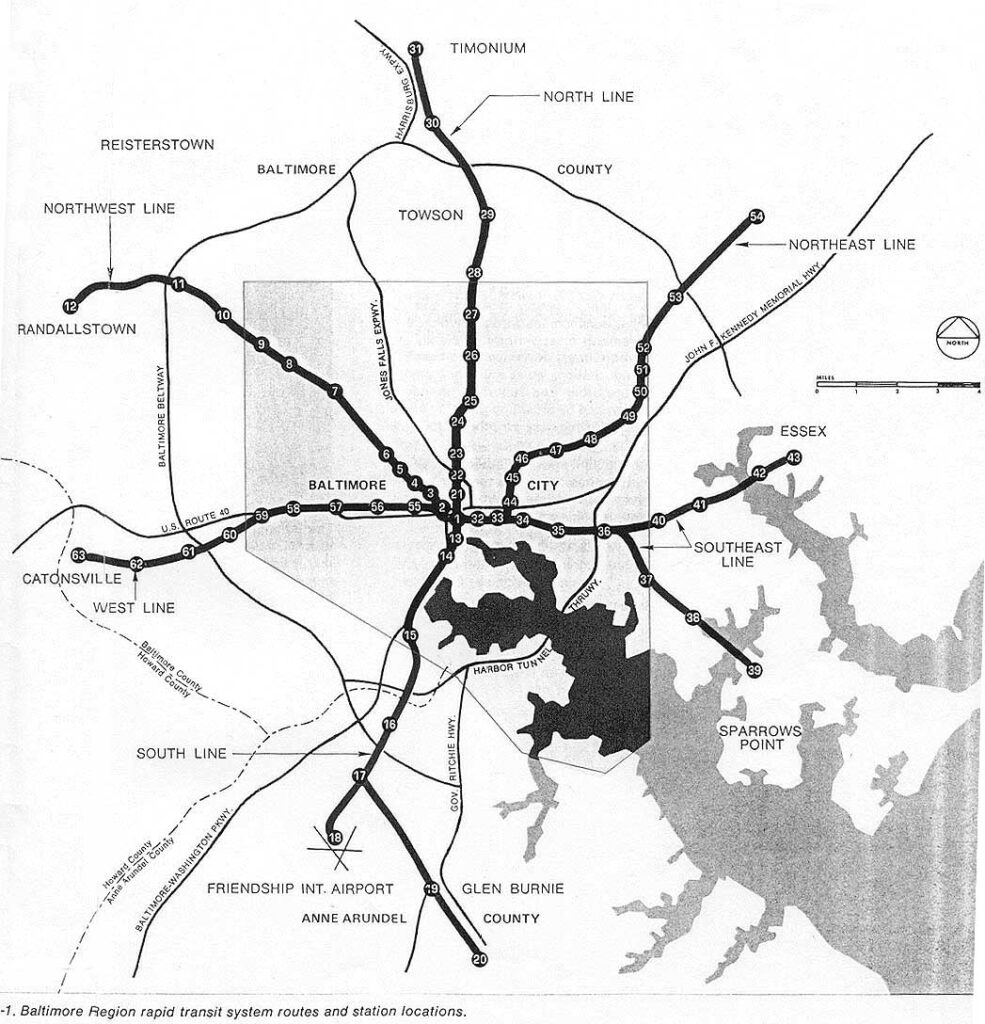
Proposed subway network as of 1962. The Northwest line would be go to Owings Mills, and the North/South line would become the light rail. The rest never happened.
Paris on the other hand, is extremely integrated into the city’s culture. Everyone uses it to get around. It’s dense, vibrant, and part of the experience of Paris. Unlike Baltimore, Paris’ system continues evolving at a relatively rapid pace. I feel like it’s a model of what good transit should be.
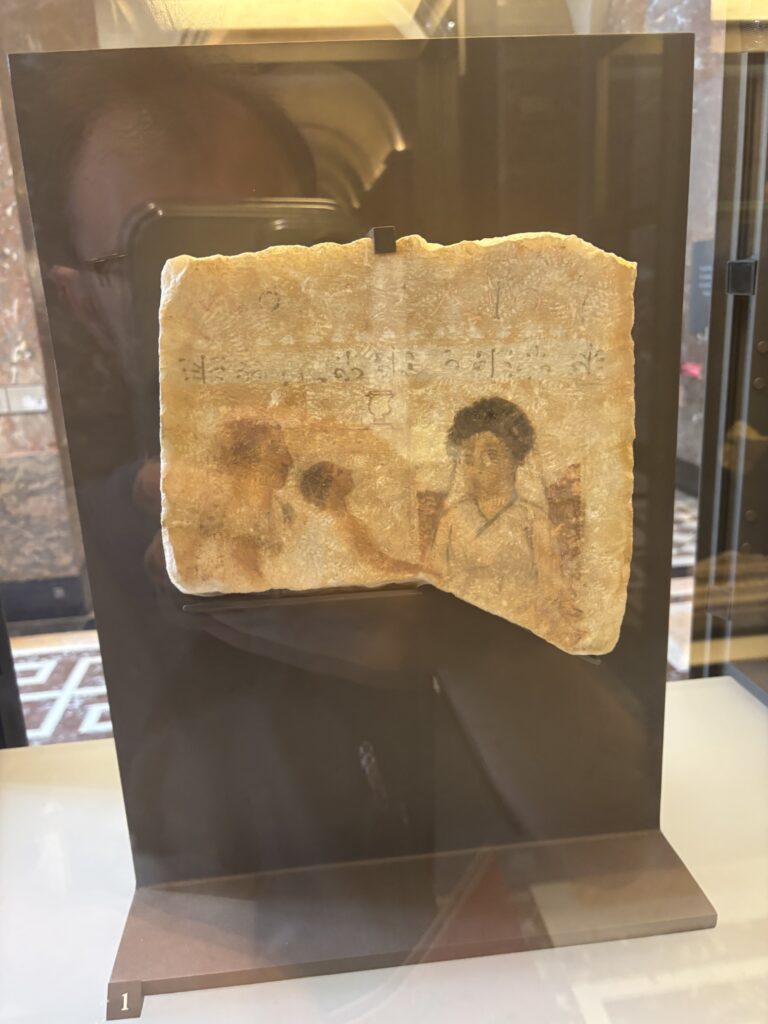
To me, paintings largely reflect one person’s perspective on an event. I feel that they also serve a single fixed meaning or aesthetic. I normally don’t like paintings, but when we went to the Louvre, I couldn’t help but admire the various paintings we saw there.
I find myself drawn to physical objects and machines rather than paintings. I appreciate art periodically, but if you had a choice between a painting of a battle or various items used in said battle, what would you want to look at?
I’d pick the collection of items, personally. There’s something about physical objects that I prefer to paintings. I think history is more alive when you can see something from the given time period, whether it be a sword or other weapon, or a collection of building fragments. They weren’t made to be looked at, but to be used and relied upon. That sense of purpose speaks to me in a way flat canvases don’t.
Paintings can tell clear, cut-and-dry stories, but artifacts invite questions and imagination to how an item was used. To me, physical objects make the past more tangible. It’s one thing to look at a depiction of an event, but another to see something that was used during it.
It’s not just items that interest me, but old industrial buildings that were turned into museums that interest me. The Sloss Furnaces National Historic Landmark (active from 1882 to 1971) in Birmingham , Alabama, the Georgia State Railroad Museum in Savannah (former Central of Georgia Railway shops and terminal), and the Fireman’s Hall Museum (restored 1902 firehouse) in Philadelphia among other places are interpretations of industrial, municipal and transportation history. Previously active sites where the primary structures act as museum artifacts in addition to the collections housed within. They also serve to educate the public through site-based immersion rather than traditional museum exhibits
I am also drawn to the engineering, craftsmanship and purpose behind things. I also like knowing how things worked, so seeing machines, or cross-sections of them, is naturally interesting to me. I am a largely spatial person as well, so scale, texture and the form of something is more impactful to me rather than a flat image.
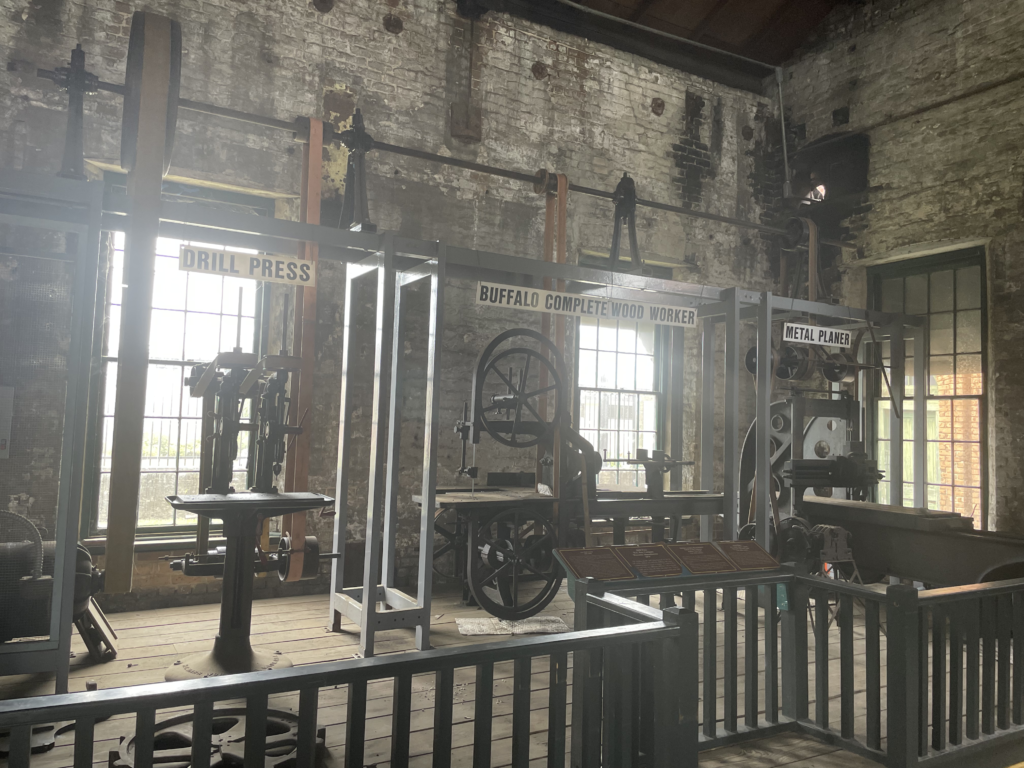
Photograph of three machines from the Georgia State Railroad Museum.
Since I got to Paris several weeks before the start of the program, I have some experience with some of Paris’ public transit. When going from CDG to my mother’s cousins apartment near the Champs-de-Mars, the RER B stop at Charles De Gaulles was in Terminal 2.
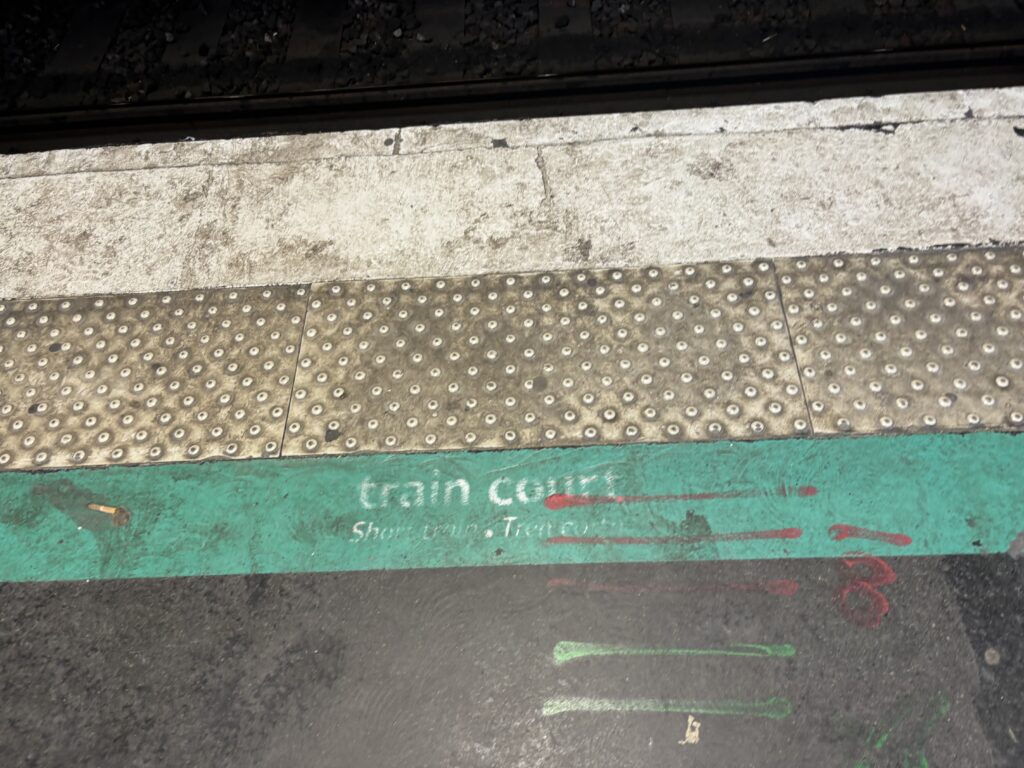
One thing I noticed on the RER C is that the announcement will say if a train’s short or not, and to go to the “short train zone”. When my mother and I were going to Gare De Nord for a train to Brussels Zuid/Midi, I looked down while at the Champ de Mars stop and saw a teal strip with “short train” on it. At a different stop I don’t remember the name of, I recall it being a yellow rectangle, which seemed inconsistent. Before noticing these markers, I just assumed everyone knew where it was and to just follow a crowd and hope they weren’t going towards the station exit.
The “short train zone” decal at the Champs de Mars RER C stop.
M6/Rubber-tired Metro Observations
Other than the RER C, and periodically the B, one of the Metro lines we frequently used to travel was the M6. The ride felt bumpier than the other Metro lines and RER lines, and just felt less safe while in motion. The method of cooling just seems to be air blowing in from the ceiling that only occurs while moving, meaning station stops very quickly get hot again. Something else I noticed was that, after seeing the Arc de Triomphe and walking to the Kleber stop, the train remained there for several minutes as opposed to the short 1-2 minute waits elsewhere. This was probably just a one-off thing, though.
Belgium NMBS/SNCB Observations
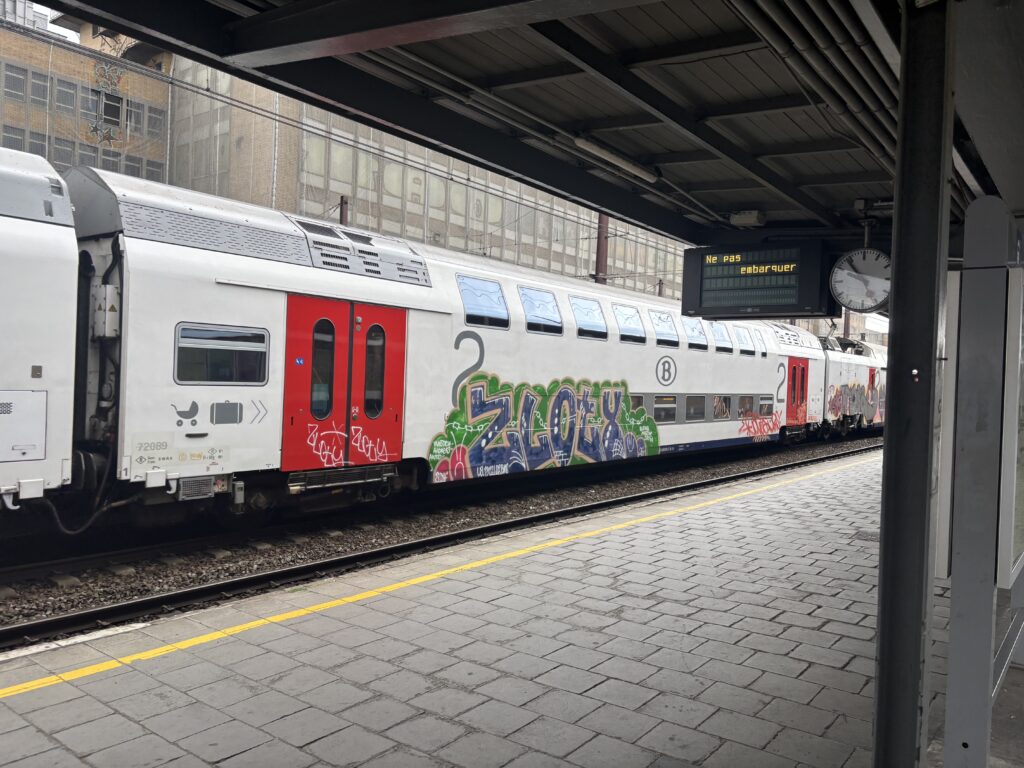
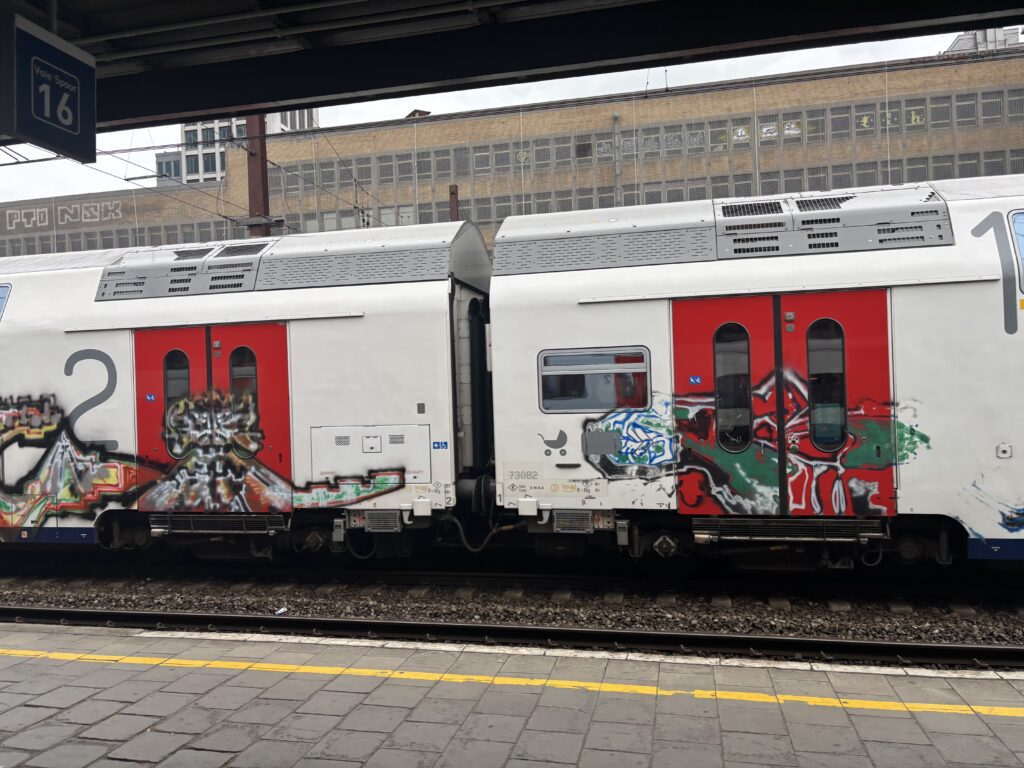
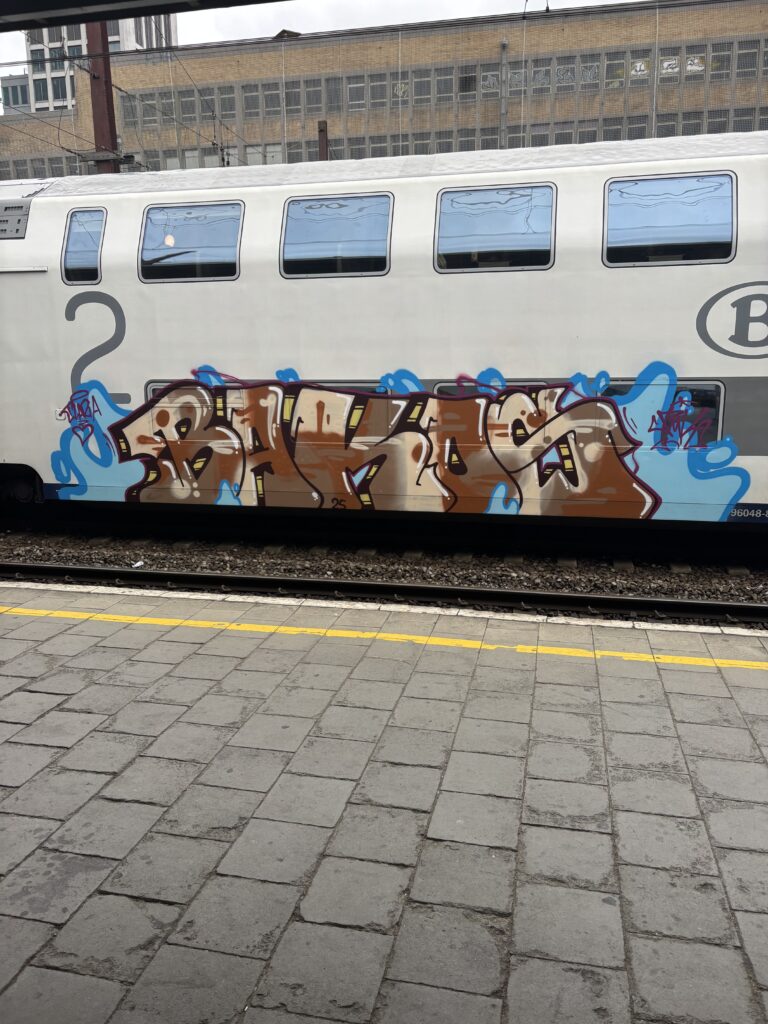
While in Brussels, we used the Belgian state railway system to go to Ghent, Antwerp, Waterloo and Shaerbeek. Some things I noticed is that their two-floor coaches are frequently covered in graffiti which isn’t a good look. Even if they were cleaned, the graffiti was still partially visible in places. I feel like Belgium should either do better at cleaning their equipment, or build it out of a graffiti-resistant material so they can continue not cleaning the exteriors. The only time I ever recall seeing graffiti on U.S. transit vehicles were photographs of the New York subway in the 1980s, both interior and exterior.
(CLEAN YOUR STUFF PLEASE)
Despite the main concourse of Brussels-Zuid being a fairly big area, there were maybe 8 ticket machines and they were frequently many people waiting to use them.
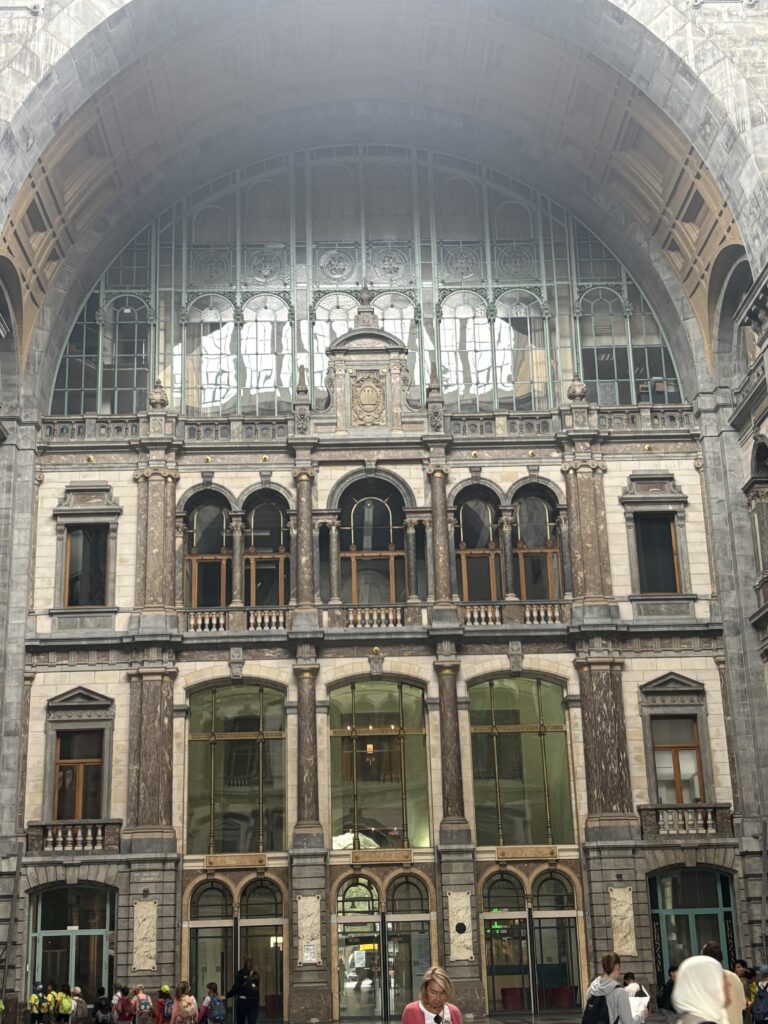
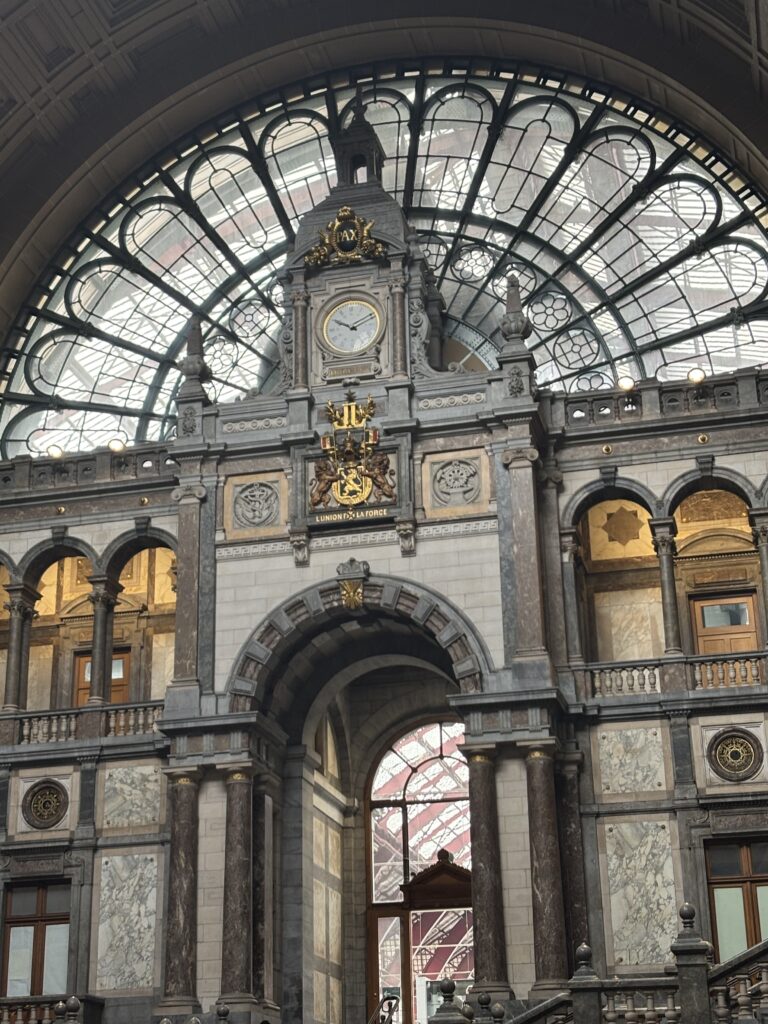
Antwerpen-Centraal is a gorgeous station both inside and out, while Shaerbeek’s exterior is also very pretty.
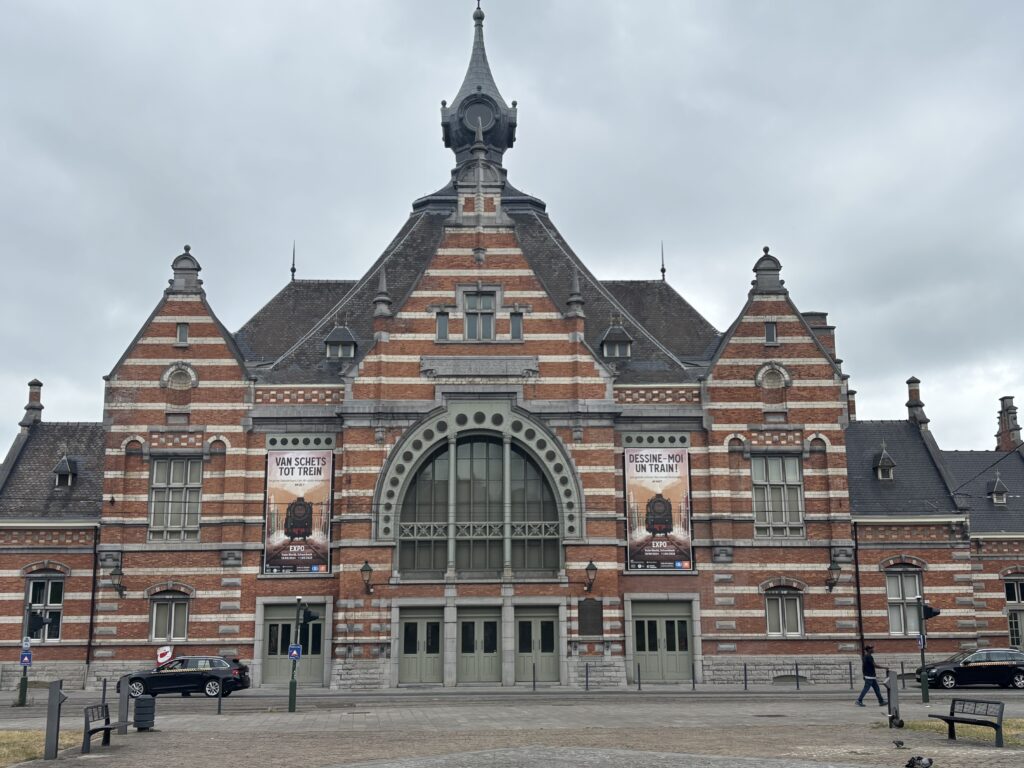
Part of Antwerpen-Centraal’s interior.The main clock with the gold accents.The exterior of Shaerbeek. The interior is pretty and the structure is now a museum, which counts as adaptive re-use I suppose.
A complaint, I suppose.
Despite having high platforms, the Eurostar from Gare du Nord, RER C, and NMBS still required you to step up into the train depending on the station you are waiting at.
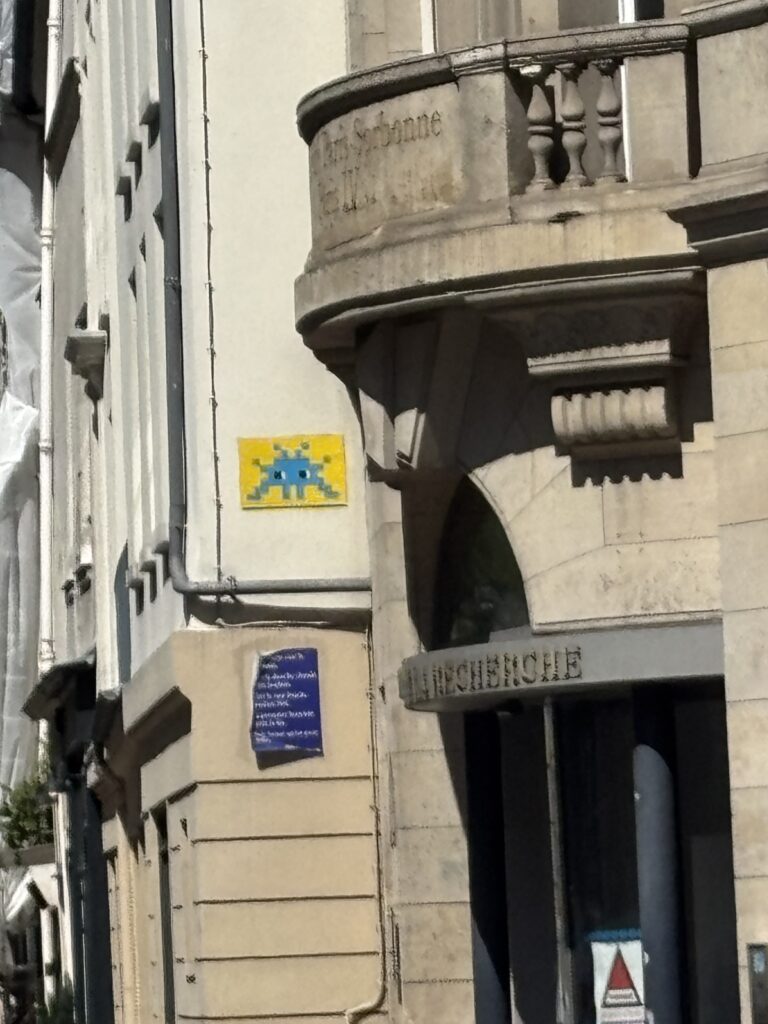
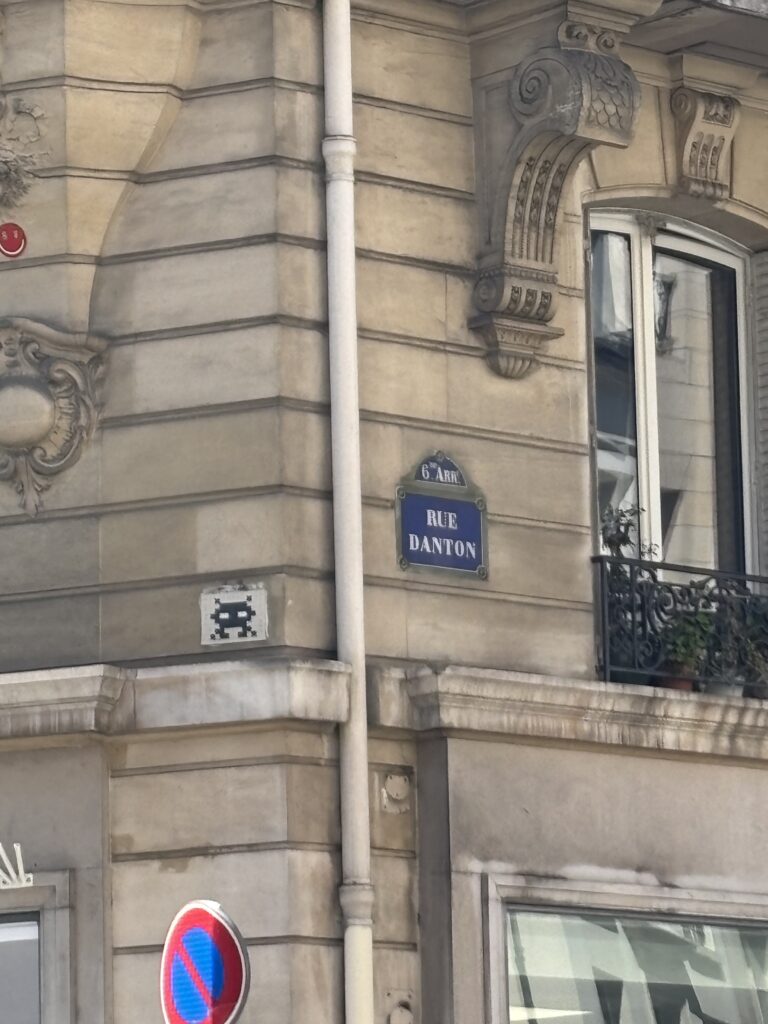
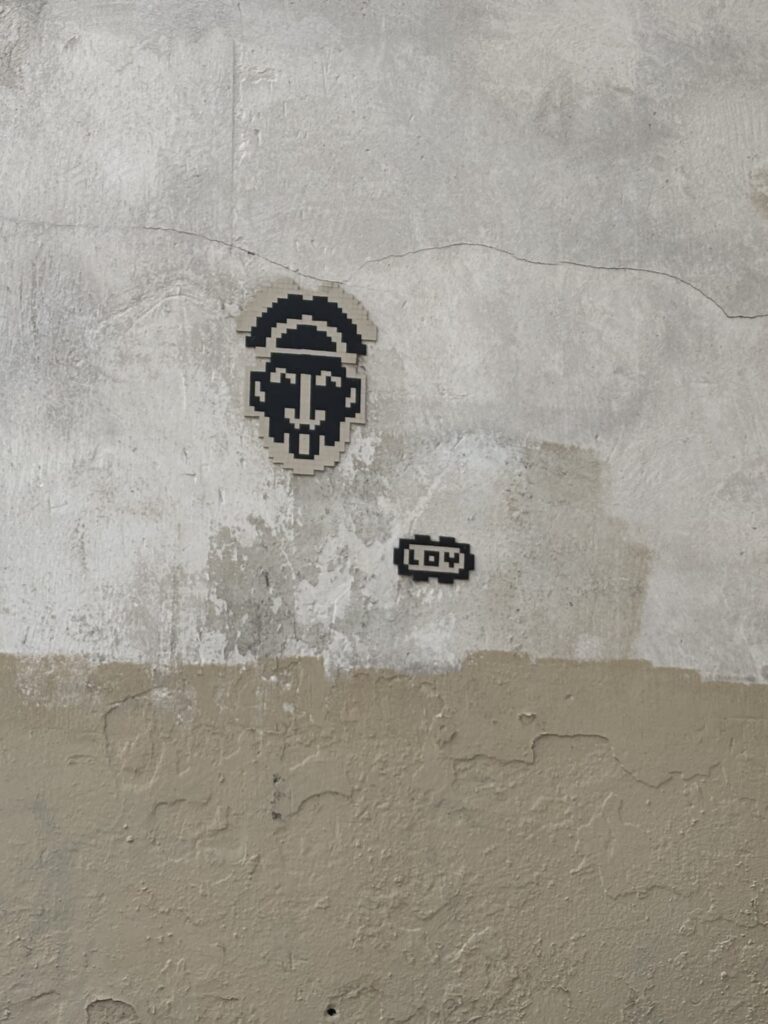
While in the Latin Quarter this week, I noticed a lot of tiny pixelated art work on the buildings and wondered why they were there. I did some research and found that most of them were created by a street artist called Invader, who mostly works within the Latin Quarter. The author of the article also states that there were other, similar works made by other people.
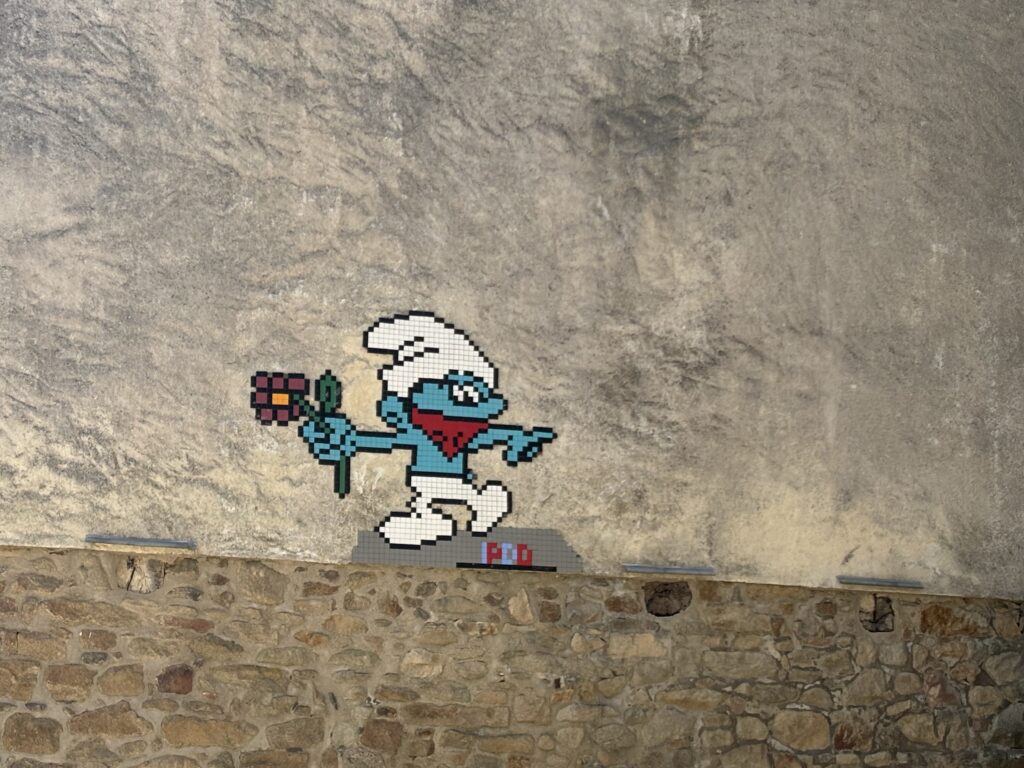
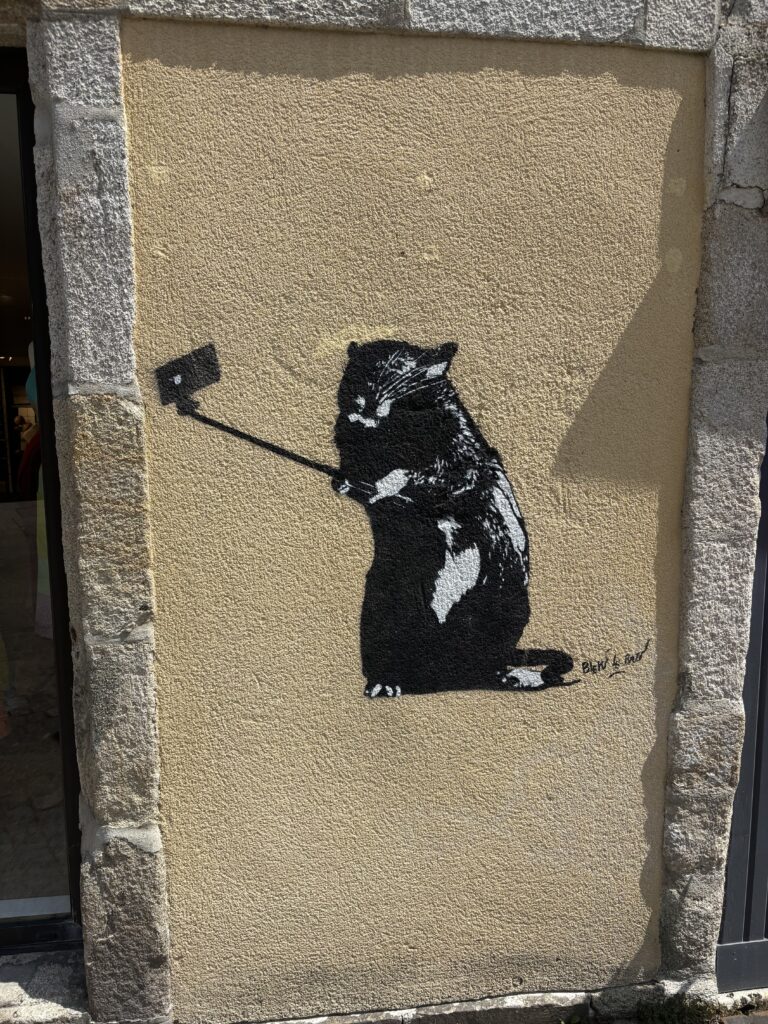
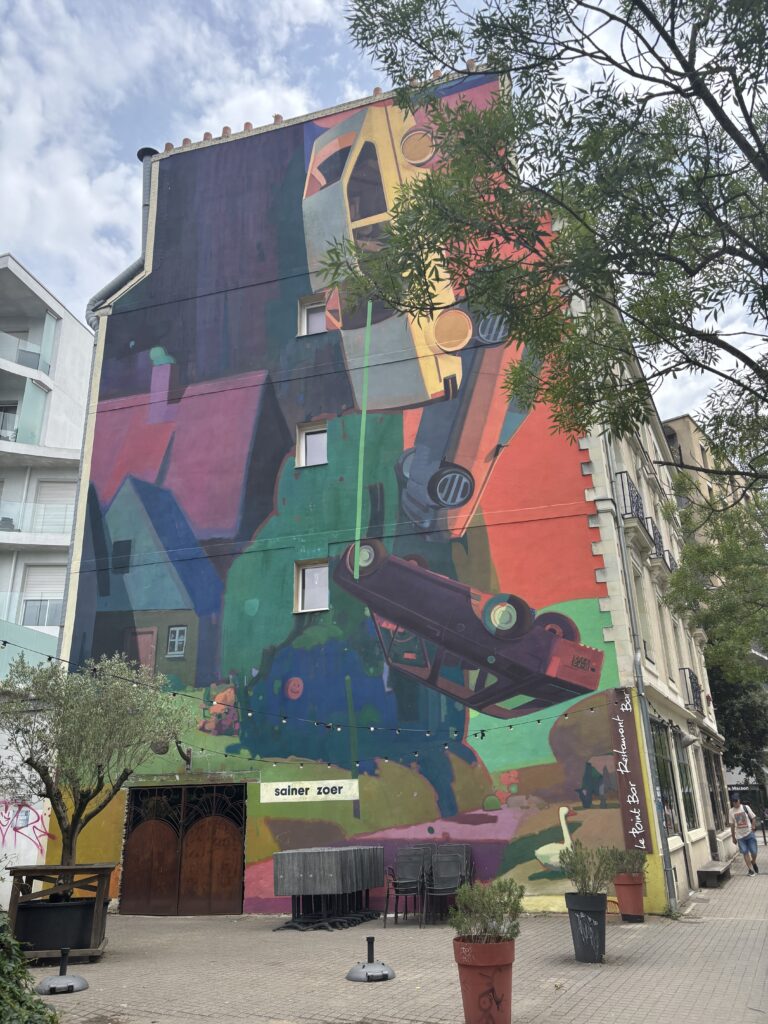
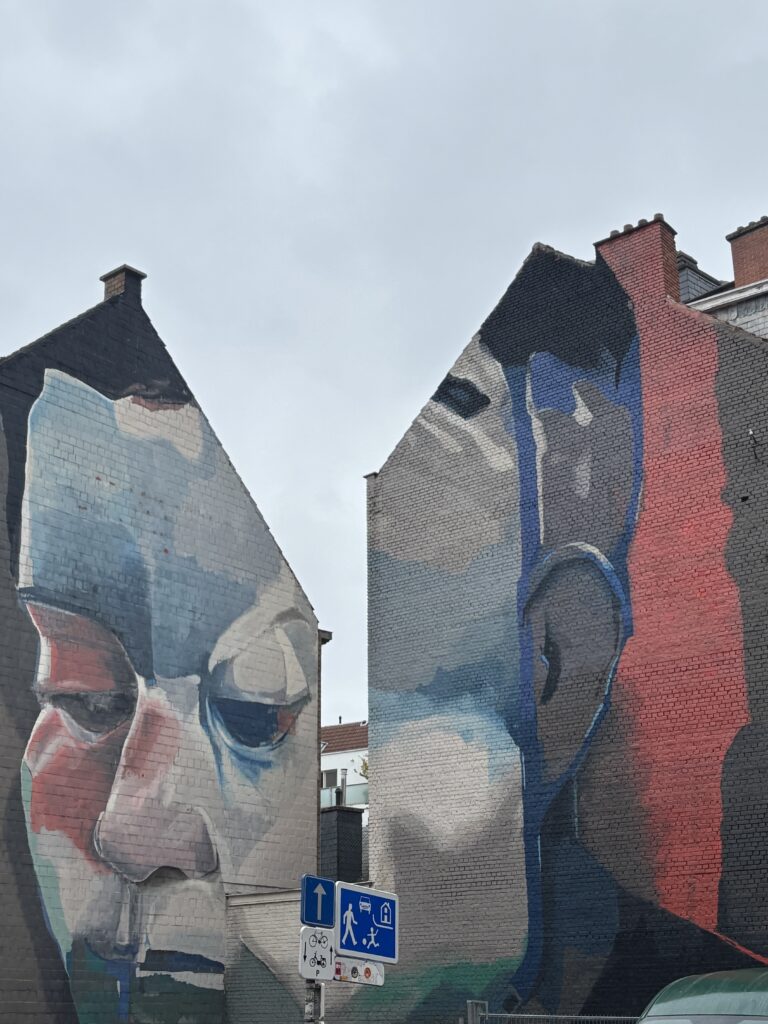
Some more art I saw around France and Belgium before the course started were a pixelated Smurf on the wall of the Vannes castle, a painted mouse taking a selfie on a shop in Quimper, and two houses fully painted on the sides, one in Antwerp, Belgium and one in Nantes.
The Smurf on the wall of the Vannes castle. Much like Tin Tin, they were created in, and are pretty well-known in Belgium.The mouse (?) taking a selfie, with a signature in the bottom rightThe very interesting art on the side of building. The cars falling from the roof are an interesting touch.This one takes up the side of two different buildings.